10 Fruit Keychain Crochet Patterns Ideas
Fruit keychains are some of the fastest amigurumi projects you can make — most finish in under an hour, use only scrap yarn, and don’t require much shaping beyond a basic ball or oval. They’re also one of the strongest “make it match the photo” categories, since a keychain lives or dies on color accuracy and clean shaping rather than complex construction.
Below are 10 fruit designs grouped by the technique each one teaches, so if you’re working through the list, you’ll pick up a few different shaping skills along the way instead of repeating the same round-count pattern ten times.
Basic round & oval shapes (start here)
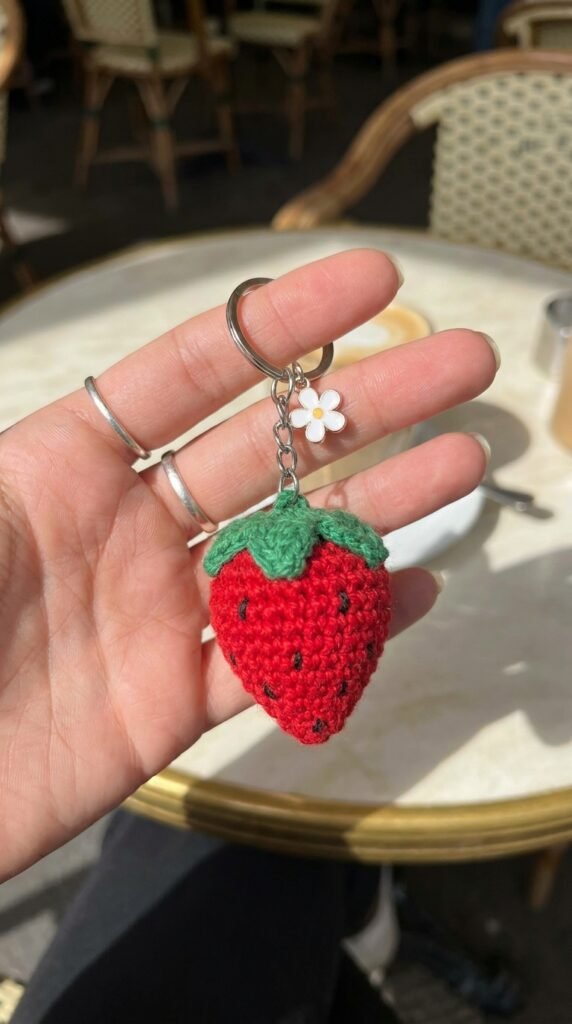
1. Strawberry Keychain
A cone-shaped body (wide at top, tapering to a point) with small yellow seed details stitched or embroidered on, topped with a crocheted green leaf cap. The tapering shape is the main new skill here versus a standard round amigurumi.
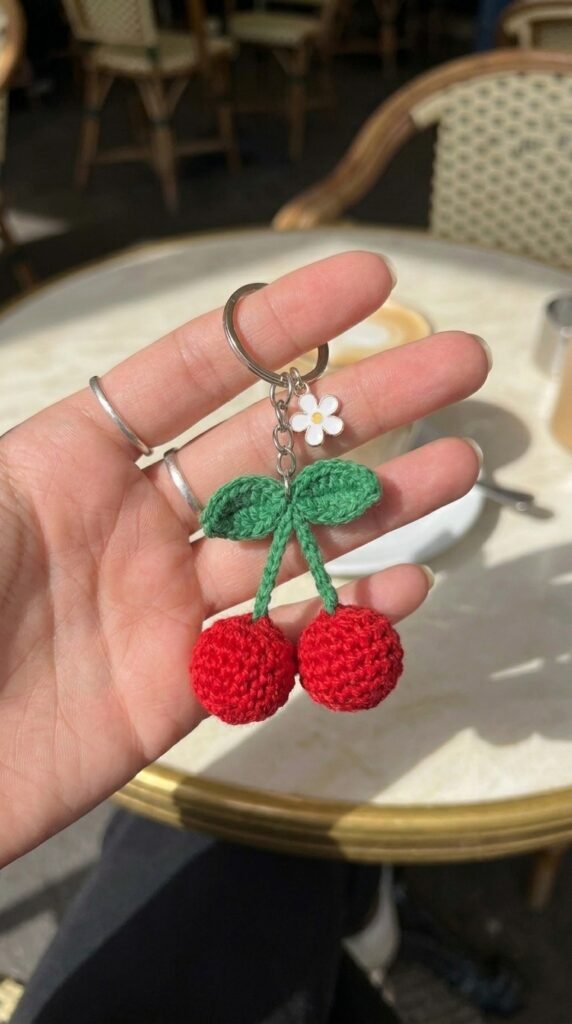
2. Cherry Pair Keychain
Two small balls joined by a short crocheted or embroidered “stem,” hung from a single keychain ring. Good introduction to attaching multiple small pieces to one connection point.
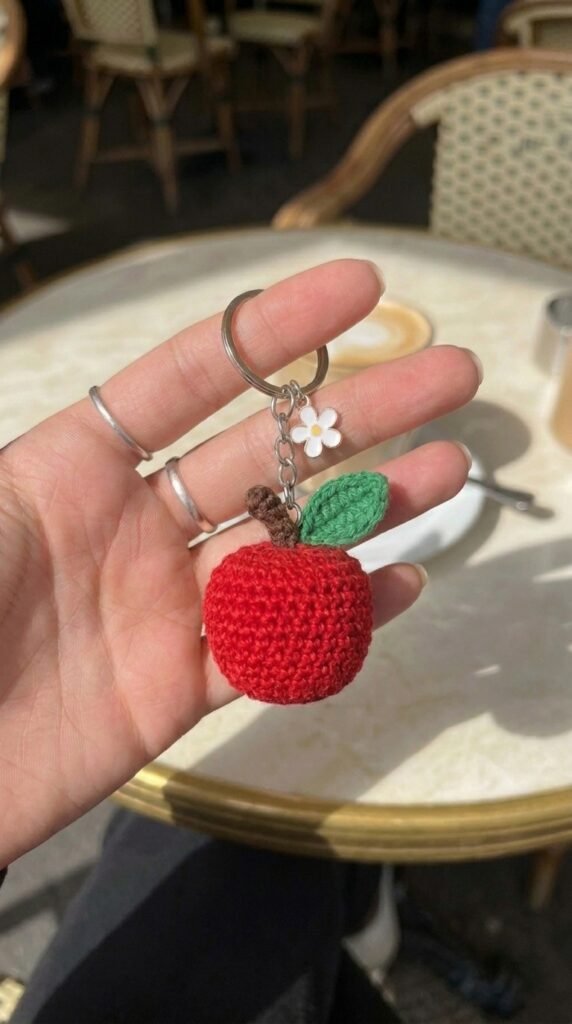
3. Apple Keychain
A round body with a slight indent at the top for the stem — achieved with a few extra decrease stitches rather than a separate piece. Teaches subtle shape modification on a basic ball base.
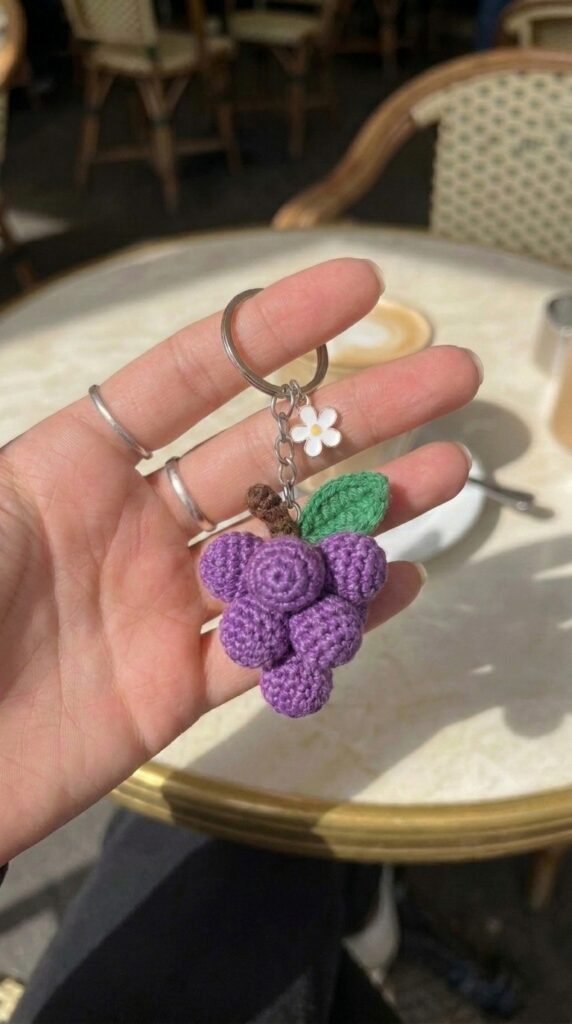
4. Grape Bunch Keychain
A cluster of 6–8 small balls joined together in a triangular bunch shape, with a single green leaf at the top. First project on this list requiring you to plan how multiple pieces join into one cohesive silhouette.
Textured & two-tone shapes
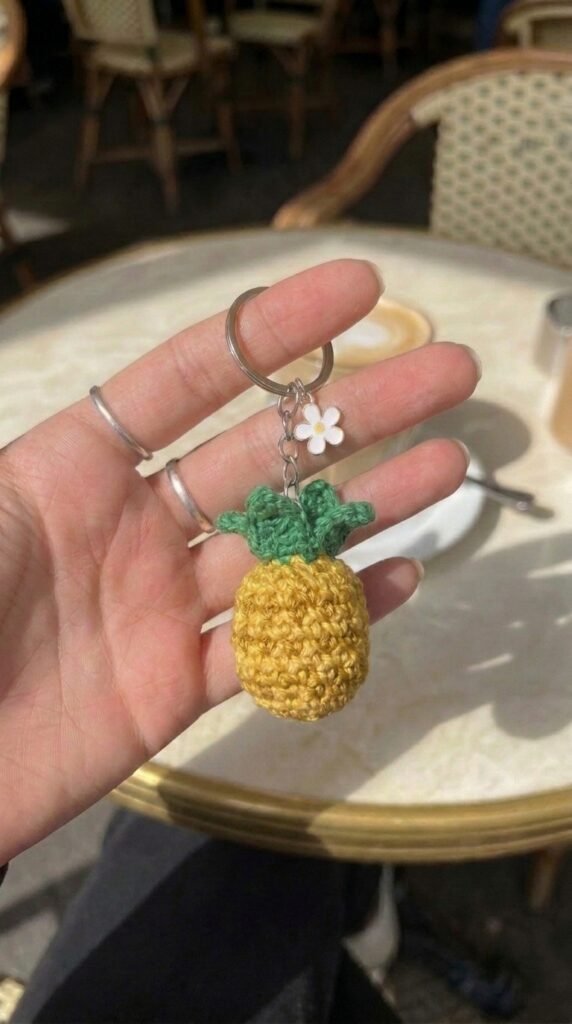
5. Pineapple Keychain
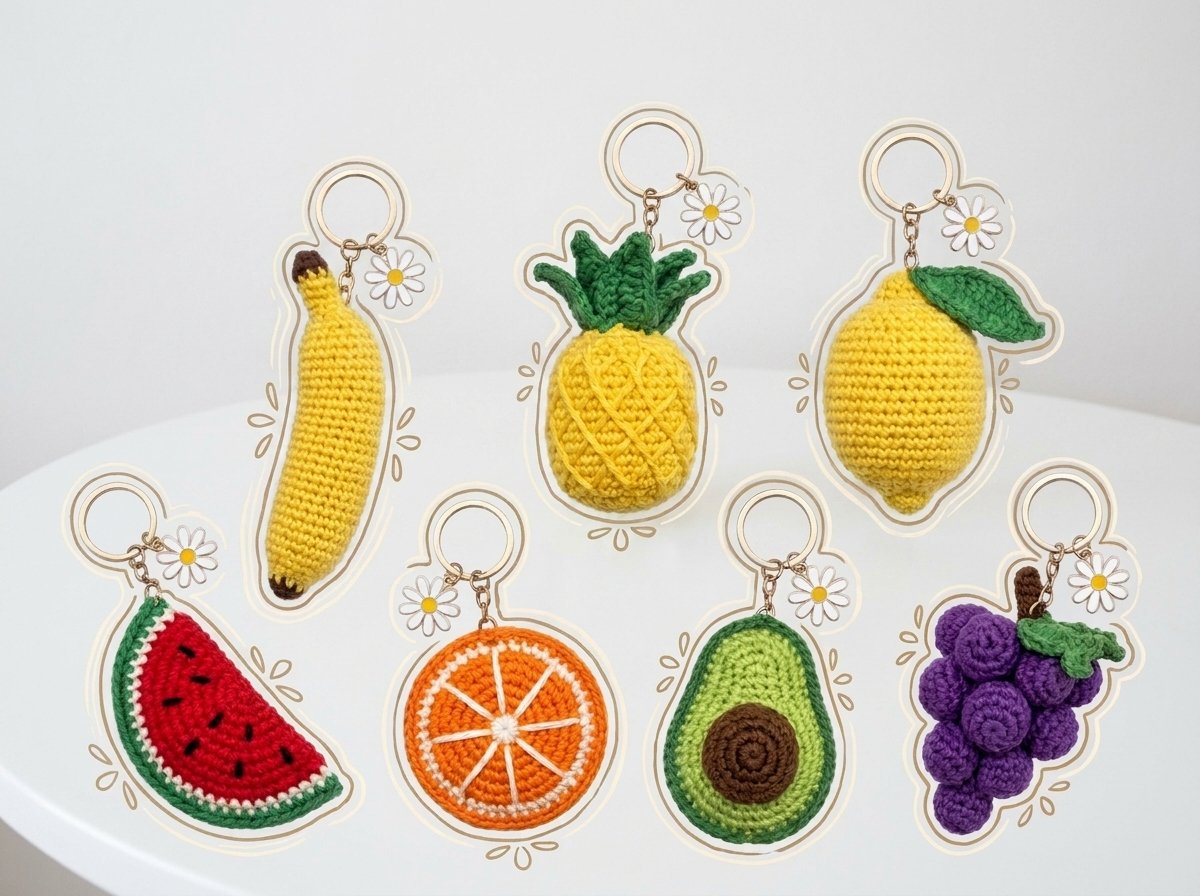
A cylindrical yellow body worked in bobble stitch for the textured “pineapple skin” look, topped with several spiky green leaf pieces. This is the most technically involved keychain on the list — good project once you’ve built confidence from the basic shapes above.
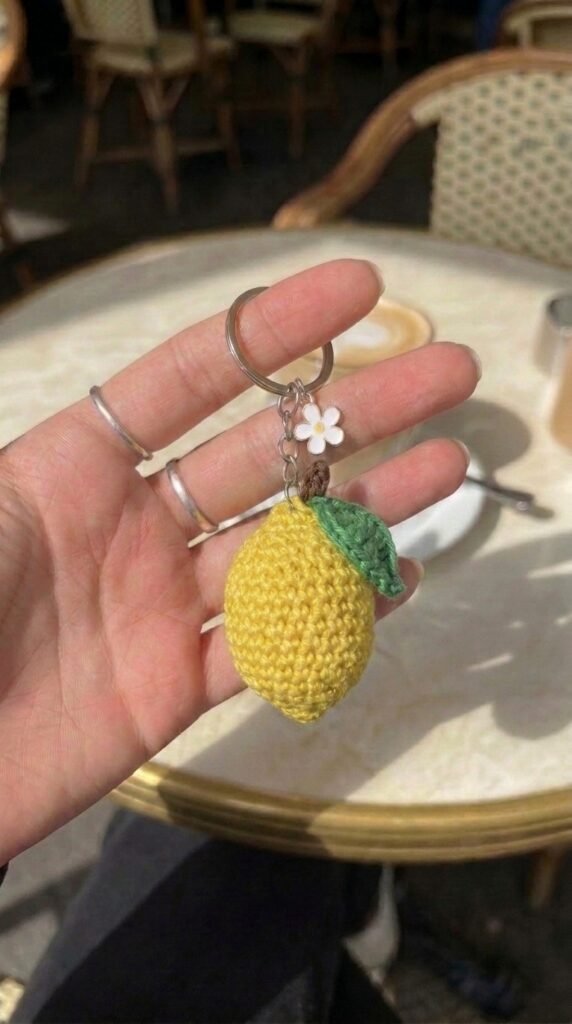
6. Lemon Keychain
A slightly elongated oval with small dimpled texture (worked in back-loop-only rows or light bobble stitch) and a small stem-end detail at one tip.
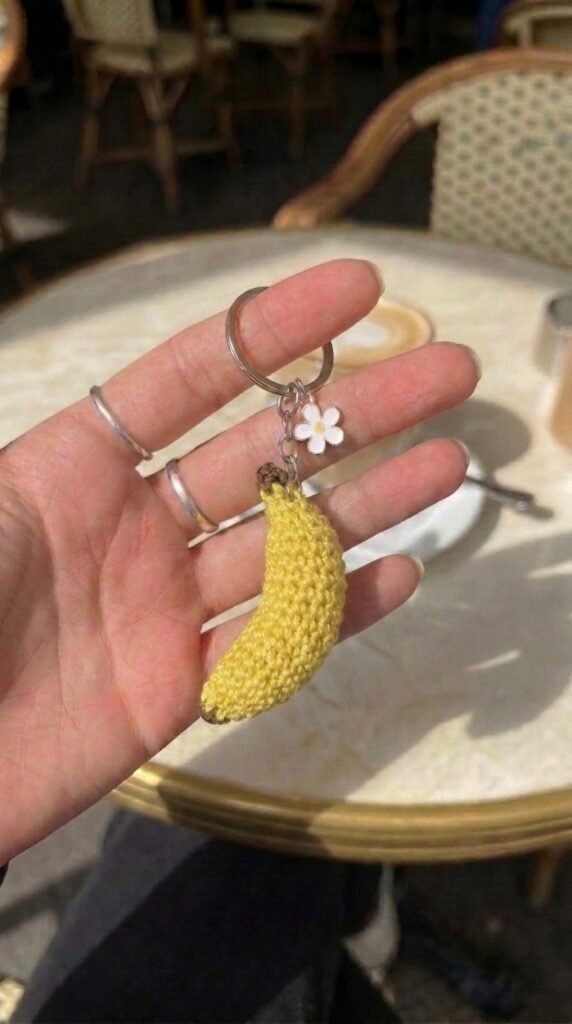
7. Banana Keychain
A simple curved shape achieved by stuffing unevenly and shaping with the seam placement rather than complex stitch counts — a good lesson in how finishing technique affects final shape as much as the stitch pattern itself.
Flat or half-shape designs
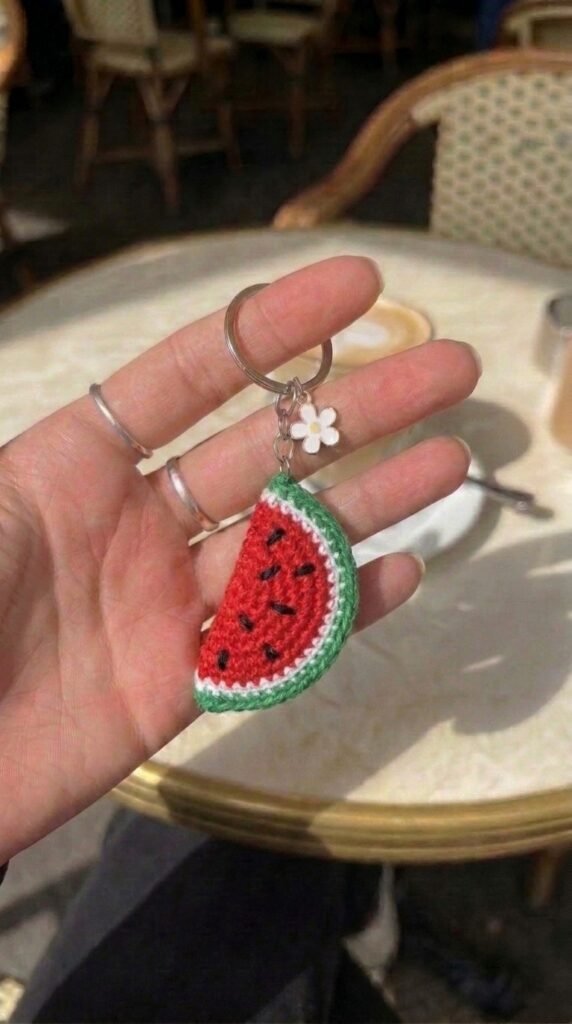
8. Watermelon Slice Keychain
A half-circle wedge shape worked flat in rows, layered in three colors (green rind, white pith line, red/pink flesh) with small black seed details embroidered on top. Teaches color-blocking within a single flat piece.
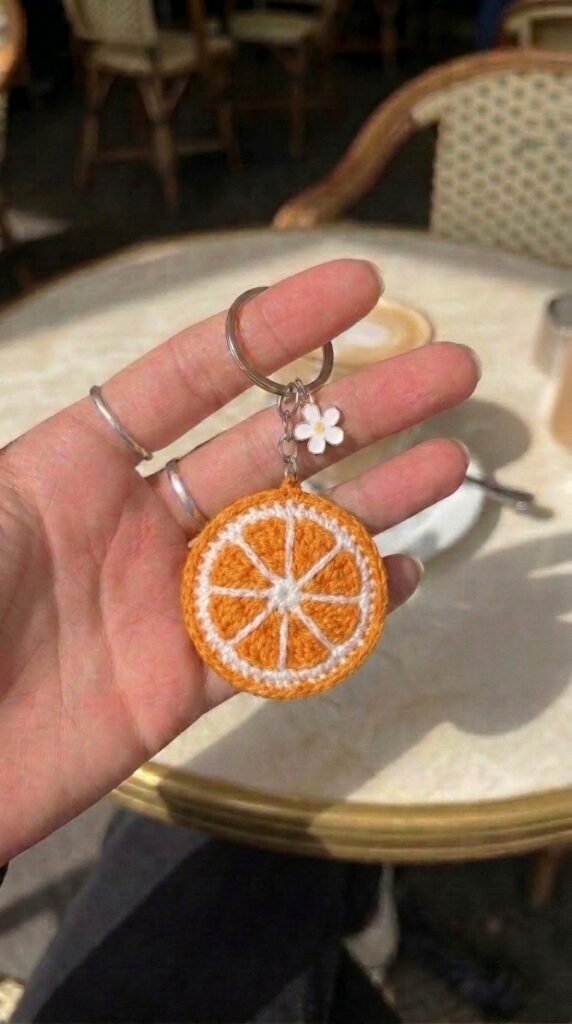
9. Orange Citrus Slice Keychain
Similar flat wedge construction to the watermelon, but with a segmented spoke pattern worked in surface embroidery or contrasting thread lines across the slice face.
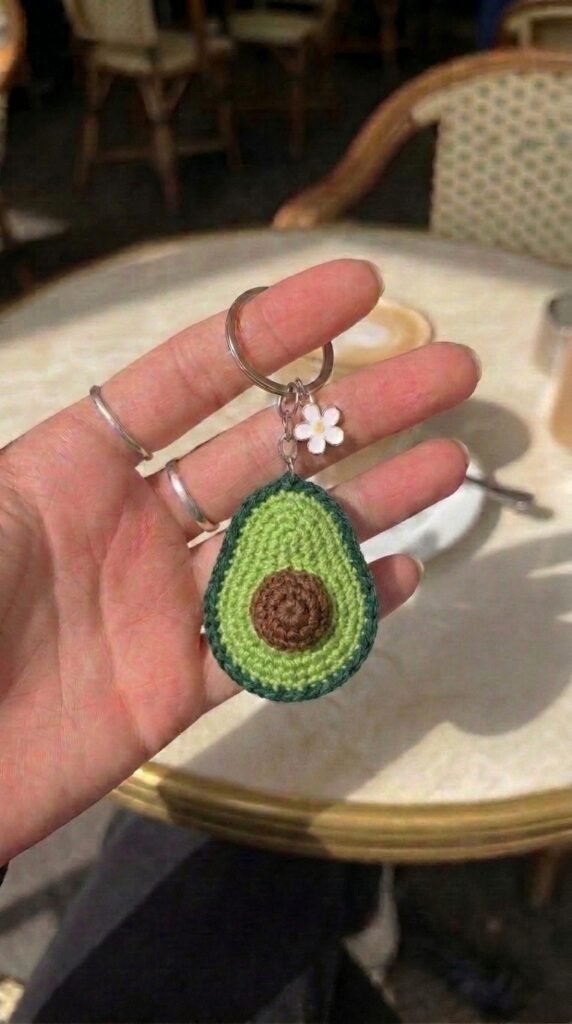
10. Avocado Keychain
A two-tone split design — dark green skin, lighter green flesh, and a small brown pit — worked as one piece with color changes rather than separate parts. One of the most-searched fruit amigurumi patterns on Pinterest, so worth prioritizing early in your publishing order.
Terms & abbreviations used across this set
| Abbrev | Term | Notes |
| sc | single crochet | base stitch for nearly all of these |
| inc | increase | 2 sc in same st |
| dec | invisible decrease | front loops only of next 2 sts |
| MR | magic ring | starting loop for round shapes |
| BLO | back loop only | used for dimpled/textured effects (lemon, pineapple) |
| bobble | bobble stitch | raised texture (pineapple skin) |
| st(s) | stitch(es) | — |
| rnd(s) | round(s) | continuous spiral unless noted |
The one detail that matters most for this whole category
Keychains are small enough that a slightly-off stitch count is far more visible than it would be on a larger amigurumi — there’s no room for the shape to “average out” over more rounds. Count stitches after every round for the first three fruits you make, even if it feels slow, until tension and counting become automatic.